
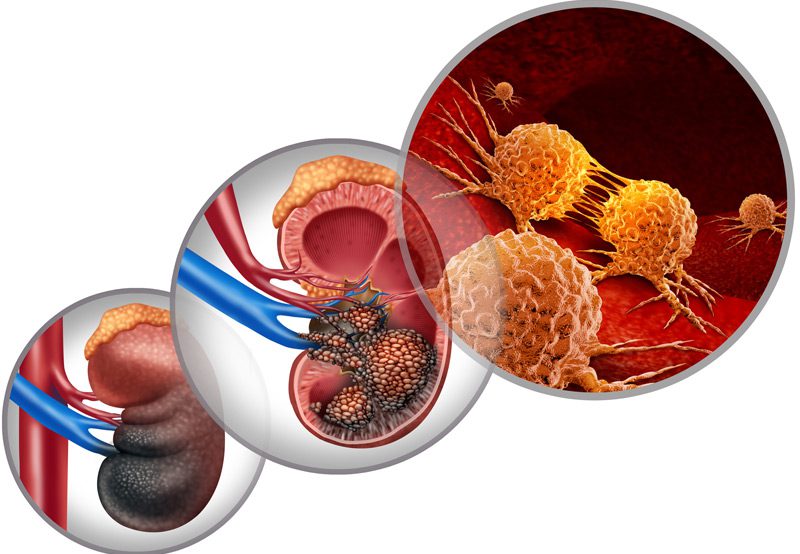

Kidney cancer, also known as renal cell carcinoma (RCC), develops when abnormal cells in the kidneys begin to grow uncontrollably. Most kidney cancers originate in the lining of the small tubes within the kidney. Early-stage kidney cancer often causes no symptoms and may be found incidentally during imaging for other concerns. When detected early, kidney cancer is highly treatable, and many patients achieve long-term remission.
Types and Risk Factors
The most common type of kidney cancer is clear cell renal cell carcinoma. Other subtypes include papillary, chromophobe, and collecting duct carcinomas. Less commonly, Wilms tumor occurs in children, and transitional cell carcinoma can affect the renal pelvis.
Risk factors for kidney cancer include:
- Smoking
- Obesity
- High blood pressure
- Family history of kidney cancer
- Chronic kidney disease
- Prolonged dialysis
- Certain genetic conditions (e.g., von Hippel–Lindau disease)
- Occupational exposure to certain chemicals (e.g., asbestos, cadmium)

Symptoms
Many kidney cancers are asymptomatic in early stages. When symptoms appear, they may include:
- Blood in the urine (hematuria)
- Persistent flank or back pain
- Unexplained weight loss
- Fatigue
- A mass or lump in the abdomen or side
- Intermittent fever
Diagnosis
Kidney cancer is often found during imaging studies for unrelated reasons. Common diagnostic tools include:
- CT or MRI scans: Provide detailed images of the kidney and surrounding structures
- Ultrasound: May help identify a solid versus cystic mass
- Urine and blood tests: Assess kidney function and detect blood or abnormal cells
- Biopsy: In some cases, a needle biopsy may be done to confirm the diagnosis
Treatment Options
Treatment depends on the tumor size, location, whether the cancer has spread, and the patient’s overall health.
Surgical options:
- Partial nephrectomy: Removal of the tumor while preserving healthy kidney tissue
- Radical nephrectomy: Removal of the entire kidney, often including nearby lymph nodes or adrenal gland
- Minimally invasive techniques: Laparoscopic or robotic-assisted surgery may offer faster recovery and less postoperative pain
Non-surgical treatments:
- Ablative therapies (cryoablation or radiofrequency ablation) may be used for small tumors or patients unable to undergo surgery
- Immunotherapy or targeted therapy may be used for advanced or metastatic kidney cancer
Surveillance and Prognosis
After treatment, ongoing surveillance with imaging and lab tests helps monitor for recurrence. Prognosis varies depending on the cancer’s stage and aggressiveness at diagnosis. Early-stage kidney cancer has a favorable outlook, with five-year survival rates over 90% for localized tumors.
Advances in surgical techniques and systemic therapies continue to improve outcomes for patients with kidney cancer. Early detection and individualized treatment planning are key to long-term success.