

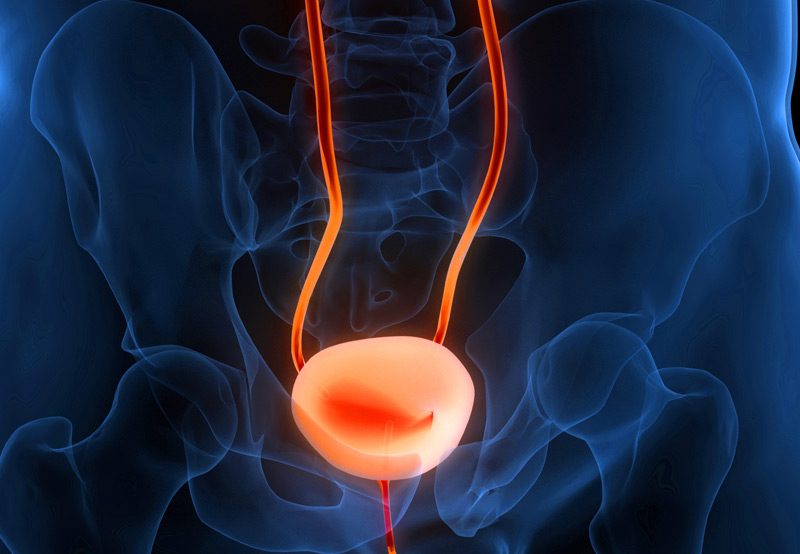
Bladder cancer occurs when abnormal cells grow uncontrollably in the bladder lining, often forming tumors. It is one of the most common urologic cancers, especially in men over the age of 55. Most cases are diagnosed early, when the disease is highly treatable. However, recurrence is common, so long-term surveillance is crucial.
Types and Risk Factors
The majority of bladder cancers are urothelial carcinomas (also called transitional cell carcinomas), which begin in the cells lining the bladder. Less common types include squamous cell carcinoma and adenocarcinoma.
Risk factors include:
- Smoking: The leading risk factor, as tobacco chemicals are excreted in the urine and contact the bladder lining
- Occupational exposures: Long-term exposure to chemicals used in dye, rubber, leather, and chemical industries
- Chronic bladder irritation: Such as from long-term catheter use, infections, or bladder stones
- Radiation therapy or chemotherapy: Especially with drugs like cyclophosphamide
- Family or personal history of bladder cancer

Symptoms
Bladder cancer symptoms can be subtle and often resemble less serious conditions. Common signs include:
- Blood in the urine (hematuria): Often painless and may be intermittent
- Frequent urination
- Painful urination
- Urgency to urinate
- Pelvic or back pain (in advanced stages)
Diagnosis
Initial evaluation includes:
- Urinalysis and urine cytology: To detect blood or abnormal cells
- Cystoscopy: A thin camera inserted through the urethra to examine the bladder lining
- Biopsy: Tissue samples are collected during cystoscopy for definitive diagnosis
- Imaging studies: Such as CT urogram or MRI to assess tumor spread
Treatment Options
Treatment depends on the cancer’s stage and grade, as well as the patient’s overall health.
Non–muscle-invasive bladder cancer (NMIBC):
- Transurethral resection of bladder tumor (TURBT): Removal of tumors via the urethra
- Intravesical therapy: Delivery of medications (e.g., BCG or chemotherapy) directly into the bladder to reduce recurrence
Muscle-invasive bladder cancer (MIBC):
- Radical cystectomy: Surgical removal of the bladder, often with urinary diversion
- Systemic chemotherapy or immunotherapy: Given before or after surgery to improve outcomes
- Bladder-preserving approaches: Combination of TURBT, radiation, and chemotherapy in select patients
Surveillance and Prognosis
Because bladder cancer frequently recurs, patients require regular follow-up, typically with periodic cystoscopy and imaging. The prognosis depends heavily on the stage and grade at diagnosis. Early-stage cancers tend to have excellent survival rates, while advanced disease may require aggressive, multimodal treatment.
Bladder cancer is manageable, especially with early detection, and ongoing advancements in immunotherapy and targeted treatments continue to improve outcomes for many patients.